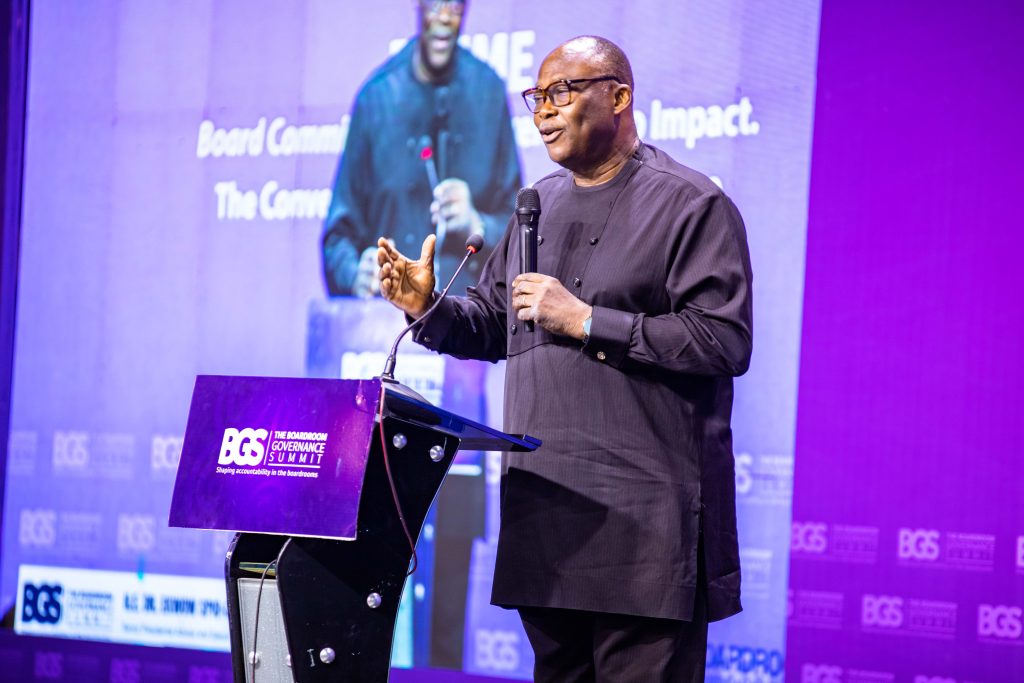

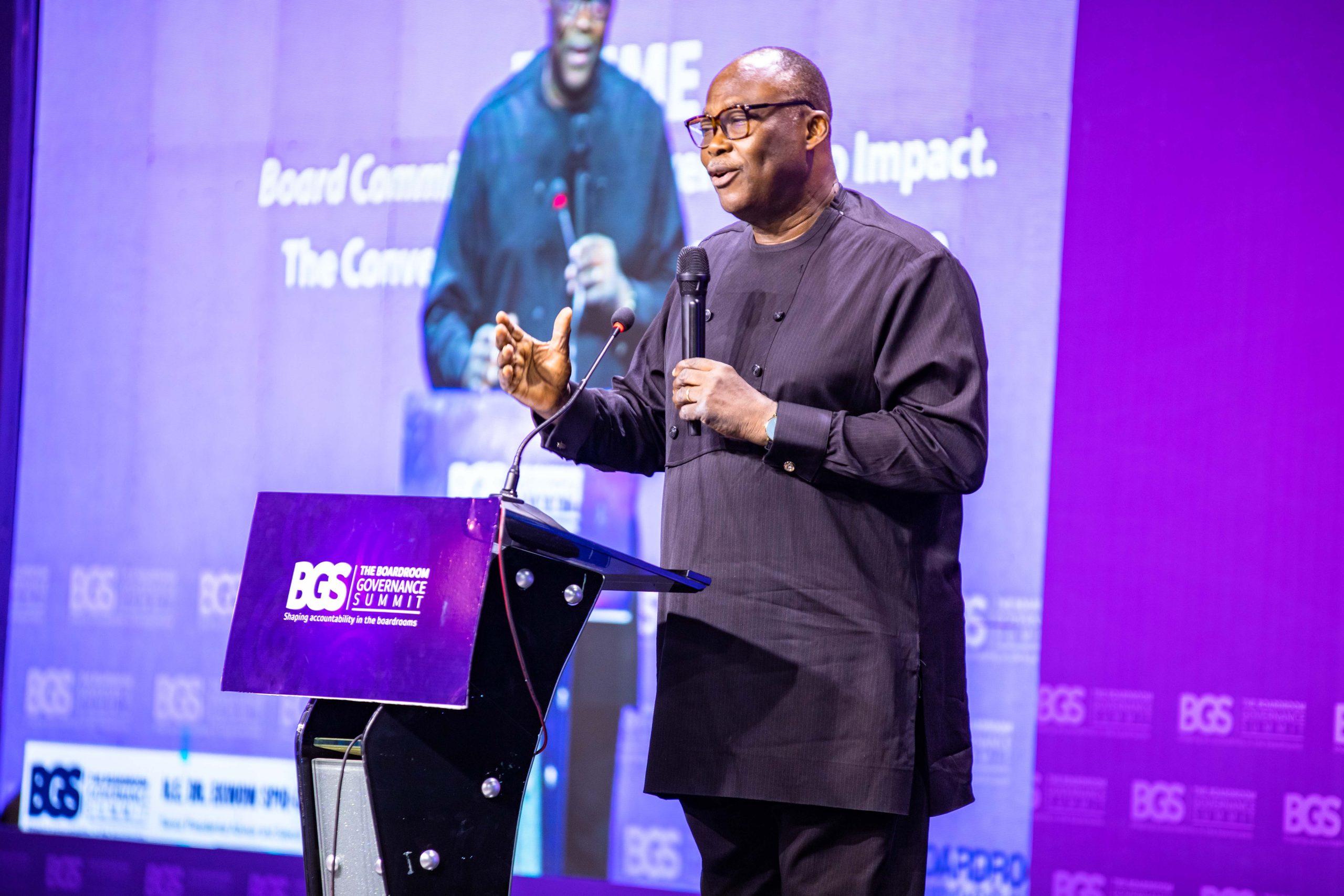
Delivered by HE Dr Ekwow Spio-Garbrah, Presidential Special Envoy on Reparation and Diaspora Relations, Chairman of the Boardroom Governance Summit 2026
Theme: Board Committees: From Oversight to Impact
Labadi Beach Hotel, Accra, 12 November 2026
Approximate delivery time: 30 minutes
Protocol and Opening
The Convenor of the Boardroom Governance Summit, Ing. Prof. Douglas Boateng; our Special Guests of Honour; the President of the Ghana Bar Association; the President of the Institute of Directors Ghana, Mrs Mary Yeboah; Presidents and leaders of our partner professional bodies; Chairpersons, Directors and Chief Executives; members of the diplomatic corps; colleagues joining us from across the continent and around the world in person and online; distinguished ladies and gentlemen.
Good morning, and welcome to the Boardroom Governance Summit 2026.
Let me begin by thanking the Convenor and the organising team for the honour of inviting me to chair this year’s summit. I accepted without hesitation, because I believe that few gatherings on our continent ask a more important question than the one before us today: how do we make the boardroom an engine of the Africa we desire?
I also wish to thank each one of you for being here. Many of you have travelled from other African countries, and some of you have rearranged demanding schedules to join us. Your presence is itself a statement. It says that the leaders of African enterprise are ready to look honestly at how we govern, and to commit to doing it better.
This summit has earned a reputation as one of the most significant boardroom-focused gatherings on the continent. This year it breaks new ground by examining, for the first time on an African platform of this scale, the strategic importance of board committees. The theme, Board Committees: From Oversight to Impact, may sound technical. I want to persuade you this morning that it is anything but. It is about the future of our institutions, our economies and the generations who will inherit both.
The Africa We Desire
Distinguished ladies and gentlemen, allow me to begin not in the boardroom but with a vision.
The Africa we desire is a continent that adds value to what it produces. It is an Africa that processes its own cocoa, refines its own minerals, manufactures for its own markets and trades confidently with itself and with the world. It is an Africa whose young people do not see migration as the only path to opportunity, because opportunity has been built at home. It is an Africa whose institutions are trusted, whose companies endure across generations, and whose capital, both financial and human, works first for the development of its own people.
In my work as Presidential Special Envoy on Reparation and Diaspora Relations, I am reminded daily that history has not always been kind to Africa. The injustices of the past were real, and the case for repair is strong. But I am equally convinced that the most powerful form of repair is the one we deliver to ourselves. No reparation, no aid and no investment can substitute for well-governed African institutions that create value, keep it, and reinvest it on the continent. Restoration abroad must be matched by reconstruction at home.
That is why I say, without exaggeration, that the Africa we desire starts in the boardroom.
Our continent does not lack resources. It does not lack talent, and it certainly does not lack ambition. What has too often been missing is the disciplined, ethical and courageous stewardship that turns resources into lasting prosperity. When governance fails, wealth leaks away. When governance succeeds, wealth compounds. The difference between those two outcomes is very often decided in rooms like the ones many of you sit in every month.
The African Continental Free Trade Area offers us a market of more than a billion people. Our diaspora, many of whom are highly skilled and well resourced, stands ready to invest in a continent they can trust. Global capital is searching for growth, and Africa is where the growth will be. Yet every one of these opportunities carries the same question: can our institutions be trusted? Investors, partners and citizens all ask it, and the answer is written in the quality of our boards.
Why the Boardroom Matters
The boardroom is where purpose meets power. It is where strategy is approved, where capital is allocated, where leaders are appointed and removed, and where risk is either confronted or ignored. Every major decision that shapes an enterprise, whether it is a state owned company, a listed corporation, a bank, a family business or a public institution, passes through the board or should.
When a board is strong, management is challenged and supported in equal measure. Strategy is tested before it is adopted. Risks are named early, while there is still time to act. Accountability flows clearly, and integrity becomes the culture rather than the exception. When a board is weak, the opposite happens. Decisions drift. Conflicts of interest go unchallenged. Warning signs are explained away until they become crises, and by then the cost falls on shareholders, employees, taxpayers and communities who had no seat at the table.
We have all seen, across our continent and beyond, enterprises that once held great promise collapse not because the market turned against them, but because their boards looked away. We have seen public institutions lose the trust of citizens because oversight existed on paper but not in practice. In almost every case, the lesson is the same. Governance failure is rarely a failure of rules. It is a failure of courage, competence and character in the boardroom.
So let us be clear about what a board is for. A board does not exist to rubber stamp management proposals. It does not exist to reward loyalty or to provide comfortable positions for the well connected. A board exists to steward the long term value of the institution on behalf of those it serves, and to hold management accountable for delivering that value ethically and sustainably.
That requires directors who prepare thoroughly, ask difficult questions, declare their interests honestly, and are willing to stand alone when principle demands it. It requires Chairpersons who build cultures of open debate rather than silent consent. And, increasingly, it requires boards that organise their work intelligently, because no full board, however capable, can examine every issue in the depth that modern enterprises demand. This brings me to the heart of today’s theme.
Board Committees: From Oversight to Impact
Board committees are where much of the real work of governance is done. The audit committee safeguards the integrity of financial reporting and the independence of the auditors. The risk committee looks ahead to the threats that could derail strategy. The remuneration and nominations committees shape who leads and how leadership is rewarded. The finance, investment, procurement, technology and ESG committees each bring focus to areas where the full board cannot afford to be superficial.
Yet in too many of our institutions, committees are treated as a formality. They are constituted because a code or regulator requires them, populated without regard to the skills they need, and given terms of reference that are copied rather than crafted. They meet, they minute, and they report, but they do not always make a difference. That is oversight without impact, and Africa can no longer afford it.
What does it mean to move from oversight to impact? Allow me to offer four reflections.
First, committees must be built on competence, not convenience. An audit committee without genuine financial expertise, or a risk committee without people who understand the risks the business actually faces, cannot fulfil its purpose. Composition must follow mandate.
Second, committees must have real mandates and the independence to exercise them. Their terms of reference should be clear, their access to information unrestricted, and their right to seek independent advice respected. A committee that depends entirely on management for what it sees will only ever see what management chooses to show it.
Third, committees must connect to strategy. The finest committees do not merely look backwards to check compliance. They look forward, asking whether the organisation’s controls, investments, people and culture are fit for where it is going. An ESG committee, for example, should not be producing glossy reports. It should be helping the board understand how climate, community and governance risks will affect long term value, and how the enterprise can turn responsibility into competitive advantage.
Fourth, committees must report in a way that informs decisions. The full board must receive not just summaries of what was discussed, but clear insight into what was found, what remains unresolved and what the board needs to decide. Impact is measured not by the number of meetings held but by the quality of the decisions that follow.
When committees work in this way, they become the board’s engine room. They give directors the depth of understanding that sound judgement requires. They protect the institution from avoidable failure. And, most importantly, they help ensure that the enterprise creates value that lasts.
A Rallying Call to Executives
Distinguished Chairpersons, Directors and Chief Executives, I promised a rallying call, and so let me speak to you directly.
To the Chairpersons in this room: you set the tone. The culture of your board will mirror the culture you model. Insist on preparation. Welcome dissent. Protect the independence of your committees and give them the time and resources they need. Review the effectiveness of your board and its committees honestly and regularly, and act on what you find. Above all, remember that the chair is not a position of privilege but a position of trust.
To the Directors: your duty is to the institution and those it serves, not to whoever appointed you. Read the papers. Ask the uncomfortable question. Declare your interests without being asked. If you sit on a committee, become a genuine student of its subject. And if you find that you no longer have the time, the skills or the independence to serve well, have the integrity to step aside.
To the Chief Executives and senior executives: see a strong board not as an obstacle but as an asset. The best leaders I have known welcome rigorous oversight because it sharpens their thinking and protects them from blind spots. Bring your committees bad news early. Be transparent about risks. A management team that hides problems from its board is not managing; it is gambling with other people’s futures.
To the regulators, professional bodies and institutes of directors represented here: thank you for the work you do. I urge you to continue raising standards, strengthening the training and certification of directors, and holding boards to account for substance rather than form. Let us also make room on our boards for women and for young professionals, whose perspectives are too often missing from the decisions that will shape their future.
And to all of us as Africans: let us commit to a new standard of boardroom leadership across this continent. Let us measure our success not only by quarterly results but by the institutions we leave behind. The founders of our nations dreamt of an Africa that stands tall. We honour that dream not only through speeches, but through the quiet, disciplined work of governing well, meeting after meeting, decision after decision.
If every board represented here strengthens just one committee in the coming year, clarifies one mandate, appoints one more truly qualified member, or asks one question that would otherwise have gone unasked, the collective impact on our continent will be profound. That is how the Africa we desire is built: not in a single moment, but one boardroom at a time.
The Book and Closing
Distinguished ladies and gentlemen, shortly I will have the privilege, together with the President of the Ghana Bar Association, of launching Practical Perspectives on the Committees of the Board by our Convenor, Ing. Prof. Douglas Boateng.
This book matters because it fills a gap that has existed for far too long. Much of the literature on board committees has been written from the experience of other economies and other contexts. Here, at last, is a work that addresses the subject from a developing world and African perspective, grounded in decades of practical boardroom experience. It speaks to the realities our directors actually face, and it offers guidance that can be applied in our institutions tomorrow morning. I commend Prof. Boateng for his dedication, and I encourage every director and executive here to read it, share it and put it to work.
I also wish to thank our partner institutions, professional bodies, sponsors and supporters whose commitment has made this summit possible, as well as the speakers and panellists who will share their insights with us throughout the day. I urge you all to engage fully, to speak candidly, and to leave here not only better informed but genuinely resolved to act.
Let me close where I began. The Africa we desire will not be handed to us. It will be built by leaders who choose integrity over convenience, substance over form, and the long term over the short term. That work begins in the boardroom, and it begins with each one of us.
Let us therefore move our boards and their committees from oversight to impact, for the sake of our institutions, our nations and the generations of Africans yet to come.
It is now my honour to declare the Boardroom Governance Summit 2026 open.
Thank you, and God bless you all.